
Old Saree to New Outfit: 8 Ways to Remodel a Saree or Lehenga You Already Own
Turn your mother's Banarasi, a wedding lehenga or a saree you never wear into something new. Eight remodelling ideas, how to check if the fabric is strong enough, and what to expect when a boutique remodels it.
4 November 2026 · 8 min read · Indo Western Boutique
Almost every Indian wardrobe has them: a Banarasi saree from your mother's wedding, a heavy lehenga you wore once, a silk saree gifted years ago that you love but never actually drape. They are too precious to give away and too beautiful to leave folded in a trunk.
Remodelling gives these pieces a second life. With the right design, an old saree can become a lehenga, an Anarkali, a jacket or a modern Indo Western gown that you will genuinely wear. It keeps the memory and the craftsmanship, often costs less than buying the same quality of fabric again, and is a far more sustainable way to dress for the next wedding.
At Indo Western Boutique in Greater Noida, remodelling is one of the most rewarding things we do. This guide shares eight ideas that work well, how to check whether your fabric is ready for a new life, and what to expect from the process.
First, check the fabric
Before falling in love with a design, it is worth checking whether the fabric is strong enough to be cut and stitched again. Old silk in particular can look perfect folded but weaken along the creases.
Lay the saree or lehenga out in good daylight and look for these things:
- Weak folds: hold the fabric up to the light along the old fold lines. If you see thinning, tiny holes or the threads pull apart easily, those sections may need to be avoided or backed with lining.
- Zari condition: real zari can darken or tarnish over time. Mild dullness often looks lovely and vintage, but zari that is flaking or breaking should not sit at stress points such as the waist or armholes.
- Stains and fading: note where marks and faded patches are. A good design can often place them in seams, under pleats or in hidden panels.
- Smell and dampness: a musty smell can mean the fabric has been stored damp. Air it in the shade for a day before bringing it in.
- Fabric quantity: measure the length roughly. Most sarees are around five to six yards, but the usable amount depends on how much of it is pallu, border and plain body.
Do not worry if you are unsure. Bring the piece to the studio and we will check it with you before suggesting a design.
8 ways to remodel a saree or lehenga
1. Saree to lehenga
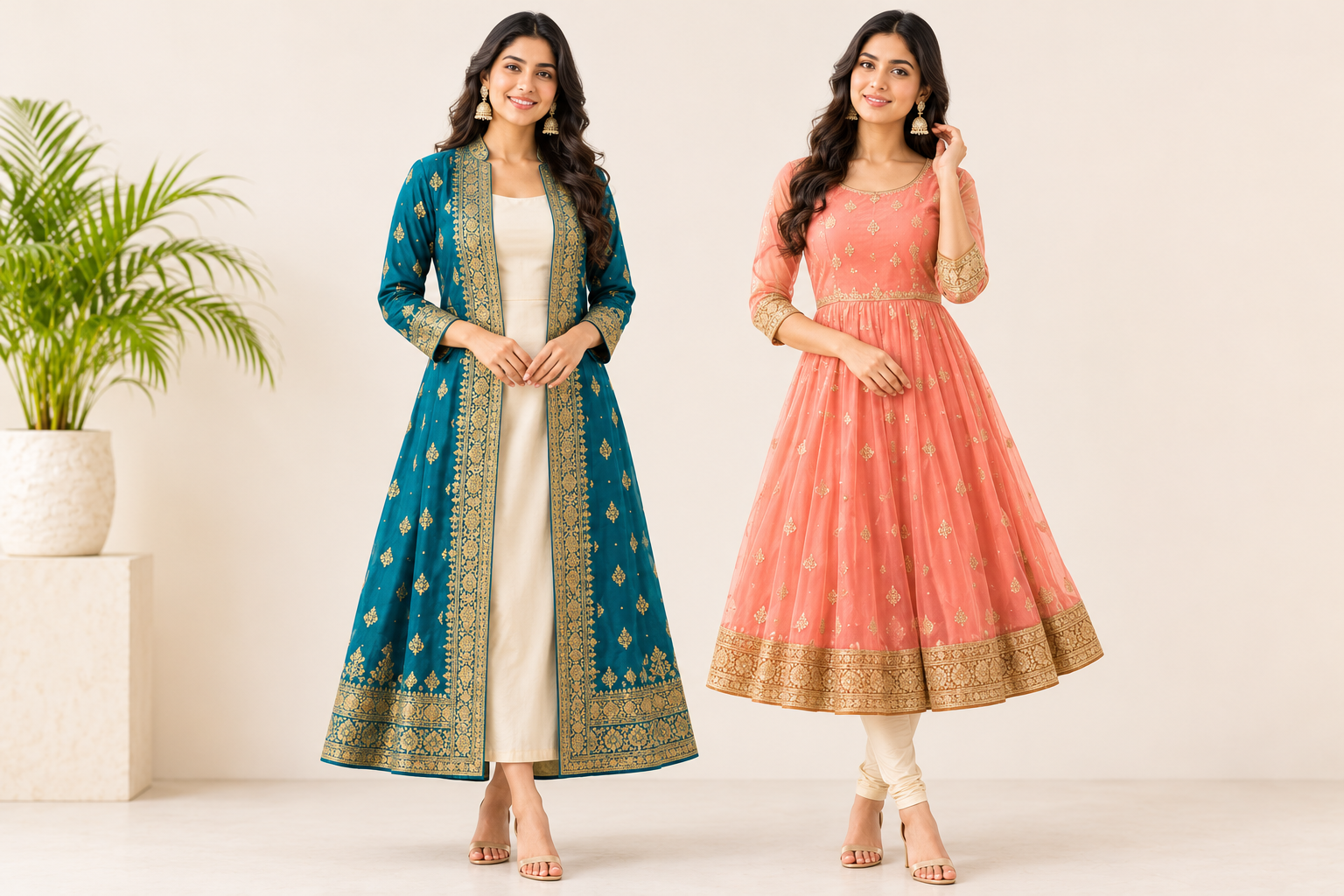
This is the most popular remodel, and silk sarees with rich borders are ideal for it. The body of the saree becomes the flared skirt, the border runs along the hem, and the pallu is often used for the blouse or as panels in the skirt.
Good to know: a single saree usually gives a lighter, moderately flared lehenga. For a very full bridal flare, we may suggest adding panels in a matching or contrast fabric, or a net layer underneath.
2. Saree to Anarkali
An Anarkali uses the saree's length beautifully in its flared kalis. The border can trim the hem and sleeves, and the pallu often becomes the yoke.
Good to know: knee or calf-length Anarkalis are usually easier to cut from one saree than full floor-length styles, which need more fabric for the flare. Our post on floor-length vs knee-length Anarkalis can help you choose.
3. Banarasi saree to a jacket or cape
Heavy Banarasi and brocade sarees make stunning long jackets, short bolero jackets or capes. Worn over a plain gown, a crop top and skirt, or even jeans for a festive brunch, they turn a single heirloom into something you can wear again and again.
Good to know: jackets need structure, so we usually add a lining and sometimes a light interfacing to help the fabric hold its shape.
4. Saree to an Indo Western gown or dress
Chiffon, georgette and crepe sarees drape well into flowing gowns, draped dhoti gowns or saree gowns with an attached pallu. This is one of the best ways to bring a softer, lighter saree into today's style.
Good to know: printed sarees can look very modern as gowns, especially with a clean neckline and a belt at the waist. Browse our Indo-Western Fusion collection for silhouette ideas.
5. Old lehenga, new styling
Sometimes the lehenga skirt is still perfect and only the rest feels dated. A new blouse, a crop top, a cape or a jacket can completely change the look. You can also wear the skirt with a contrast blouse in a different colour for a sangeet or reception.
Good to know: we can also resize the skirt, change the waistband or add cancan for more volume. See our Alterations & Fitting services.
6. Heavy wedding lehenga to two outfits
Bridal lehengas often carry a huge amount of embroidery. The skirt can be shortened or reshaped into a lighter skirt, and the extra fabric used for a separate jacket or blouse. One outfit you wore once becomes two that you will wear many times.
Good to know: heavily embroidered fabric is cut carefully around the motifs, so the final design depends on where the embroidery sits. We plan this together at the consultation.
7. Dupatta to jacket, kurta panels or blouse
A heavily embroidered dupatta can become a short jacket, a cape, embroidered sleeves or the yoke of a new kurta. It is a lovely way to reuse the most decorative part of an old suit.
8. Borders and pallus as trims
Even when the body of a saree is too weak to reuse, the border and pallu are often still strong. They can be stitched onto a new outfit as a hem border, neckline trim, sleeve band or belt, carrying a piece of the original into something completely new.
Which fabrics remodel best?
- Banarasi and Kanjeevaram silk: excellent for lehengas, jackets, blouses and capes. They hold structure and the zari stays beautiful.
- Tissue and organza: lovely for capes, dupattas, sleeves and overlays, but delicate, so they need careful handling.
- Chiffon and georgette: best for flowing gowns, Anarkalis and draped styles. Too soft for structured jackets without lining.
- Crepe and satin: great for gowns and Indo Western dresses because they drape smoothly.
- Cotton and handloom: good for everyday kurtas, short Anarkalis and co-ords.
What to expect from the remodelling process
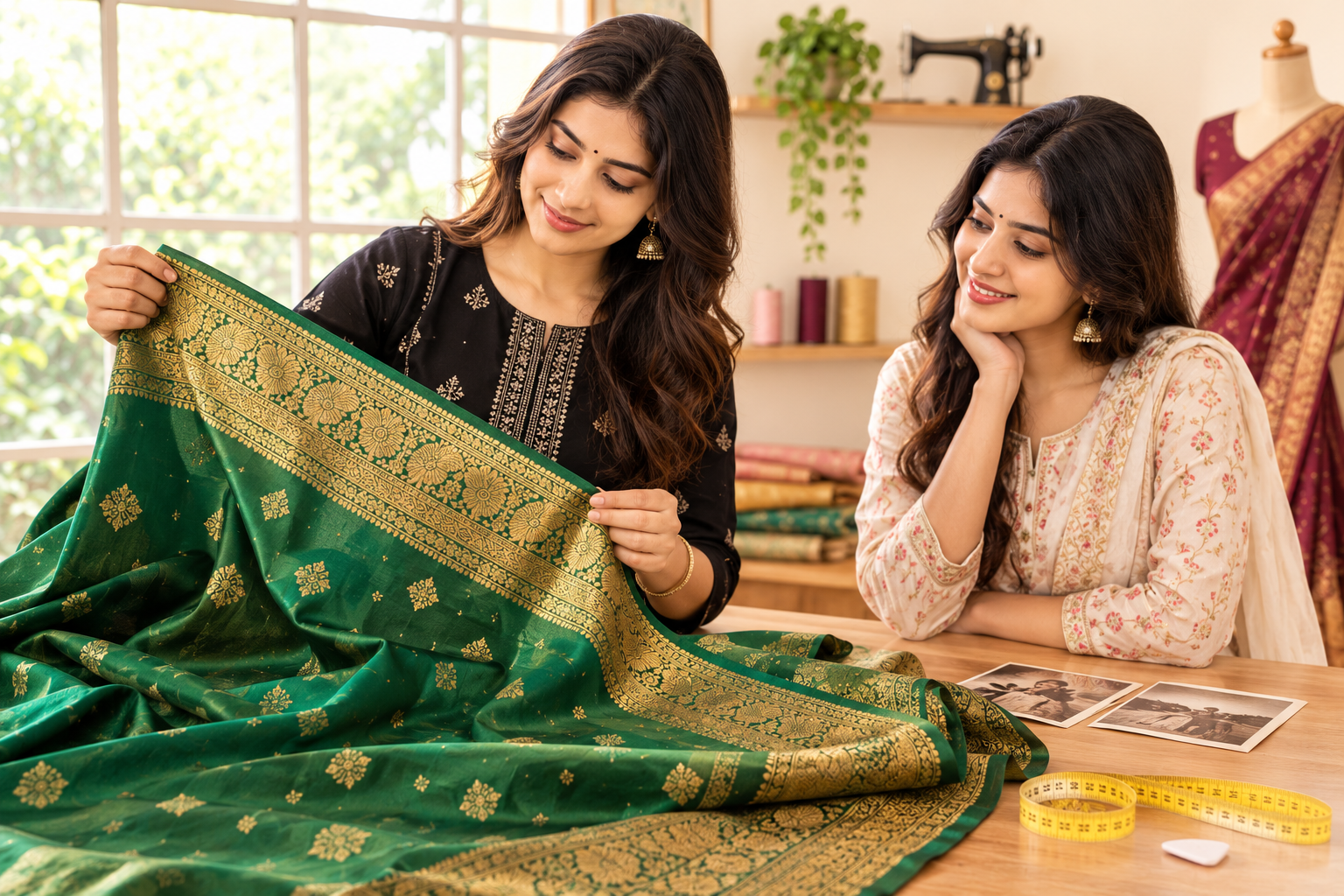
Remodelling follows the same careful steps as any custom outfit at our studio, with one extra stage at the start: examining the fabric.
- Bring the piece in. We open it out, check the fabric condition and measure how much usable material there is.
- Discuss the design. Share what you would like, or ask for suggestions. We will be honest about what the fabric can and cannot do.
- Plan the cut. We map where the border, pallu and motifs will sit before anything is cut, because remodelling fabric cannot be replaced.
- Add what is needed. Lining, support fabric or matching panels may be suggested to strengthen the outfit or add volume.
- Measurement and stitching. Your measurements are taken and the outfit is stitched to fit you.
- Trial and finish. A trial fitting for adjustments, then final finishing and handover.
You can read about our process in more detail on Our Process page.
A few honest tips
- Do not cut it yourself first. Even removing the fall or pico at home can damage the edge. Bring it as it is. If you are curious what those are, read about saree fall and pico.
- Be open to a contrast fabric. Many of the most beautiful remodels mix the old saree with a new plain fabric in a matching or contrast colour.
- Think about how often you will wear it. A jacket or a lighter lehenga will get far more use than a second heavy bridal outfit.
- Bring photos. Photos of the original wedding or occasion help us keep the feel of the piece in its new form.
- Plan early in wedding season. Remodelling takes careful planning, so share your event date at the first consultation.
Frequently asked questions
Can any saree be converted into a lehenga?
Most silk and many georgette or crepe sarees can, but the result depends on the fabric's condition and quantity. A single saree usually gives a moderately flared lehenga; extra panels or a net layer can add more volume.
Is remodelling cheaper than buying a new outfit?
It often is, because you already have the main fabric, which is usually the most expensive part. The final cost depends on the design, any extra fabric or lining needed and the amount of embroidery or finishing work.
My mother's saree is very old. Is it too delicate?
Not necessarily. Older silks can often be strengthened with lining or used for parts of an outfit that take less strain, such as a jacket, dupatta or border trim. We check it carefully with you before suggesting a design.
Can you remodel an outfit bought elsewhere?
Yes. We regularly resize, refit and remodel outfits from other stores and boutiques. Bring the piece to the studio and we will tell you what is possible.
Give your favourite fabric a second life
The most meaningful outfits are often the ones with a story behind them. With a thoughtful design and careful stitching, the saree in your cupboard can be the outfit everyone asks about at the next wedding.
Visit our studio at L65, Delta 2, Greater Noida, book a consultation or send us a photo on WhatsApp of the saree or lehenga you would like to remodel, and we will suggest what it could become.
Want an outfit like this?
Book a Consultation